Emily Bajek, Katie Sun, Sanjna Sadarangani
Dictionary.com defines advertising as “the act or practice of calling public attention to one’s product, service, need, etc., especially by paid announcements in newspapers and magazines, over radio or television, on billboards, etc.” (Dictionary.com). This definition seems to be quite outdated, however, because it does not include advertising on social media or advertising on the internet. These forms of advertising have become immensely popular and widely used. The internet and digital media have almost overtaken print media, with many newspapers online and choosing to go paperless. Nonetheless, the basic message of this definition is correct; advertisements are meant to draw attention to a product or a service or a company.
Unfortunately (or fortunately, depending on the advertisement and its contents), an advertisement also conveys subliminal messages in countless ways. The images, the words, the people, the colors, the body language, the objects and props, the effects, the diction and millions of other little, subtle pieces of the advertisements spread messages to the viewers.
Advertising has had a long history of portraying people of color in stereotypical and offensive ways. While times have definitely changed, we still see problems with advertisements in fashion today, as some continue to depict people of color insensitively. We still see advertisements that exoticize people of color, portray them as “other,” or are reminiscent of old associations or stereotypes.
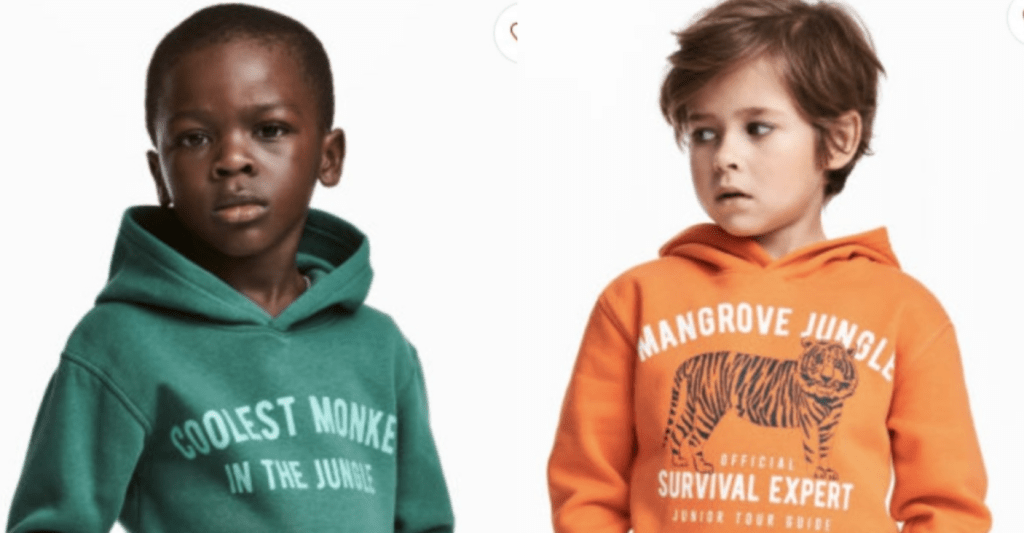
In January of 2018, the clothing retailer H&M faced a lot of criticism after people saw their website featuring a black model wearing a hoodie that read, “Coolest Monkey in the Jungle.” Additionally, a white model wore a hoodie that said, “Official Survival Expert.” Many people criticized the company, pointing out that associating a black person with a monkey echoes the racist connotations that have long been used. After news of this controversy circulated, The Weeknd, a singer who had modelled for H&M campaigns and collaborated with them on pieces for his own brand, cut ties with them as a result.
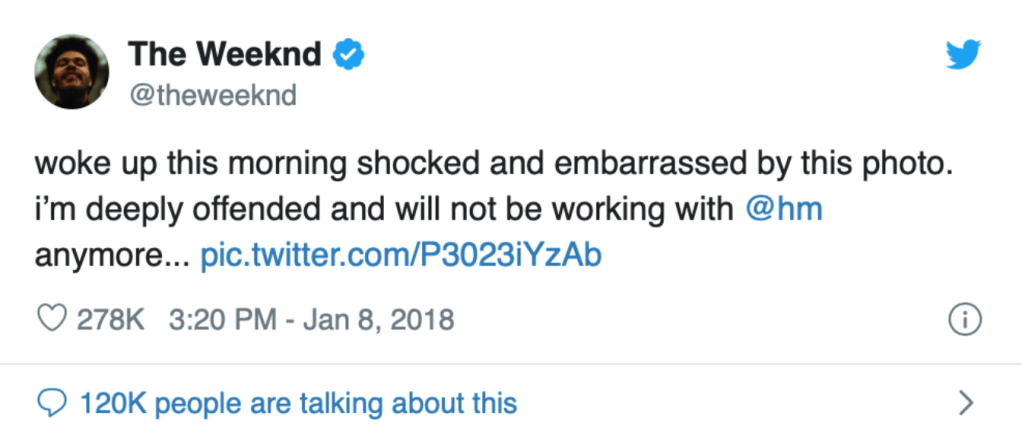
One day later, rapper G-Eazy announced the cancellation of his H&M clothing line in an Instagram post, calling the photo “racially and culturally insensitive.” In his caption, he continued, “Whether an oblivious oversight or not, it’s truly sad and disturbing that in 2018, something so racially and culturally insensitive could pass by the eyes of so many (stylist, photographer, creative and marketing teams) and be deemed acceptable.” H&M later apologized for the photo, removing it from their website and pulling the shirt from their stores.
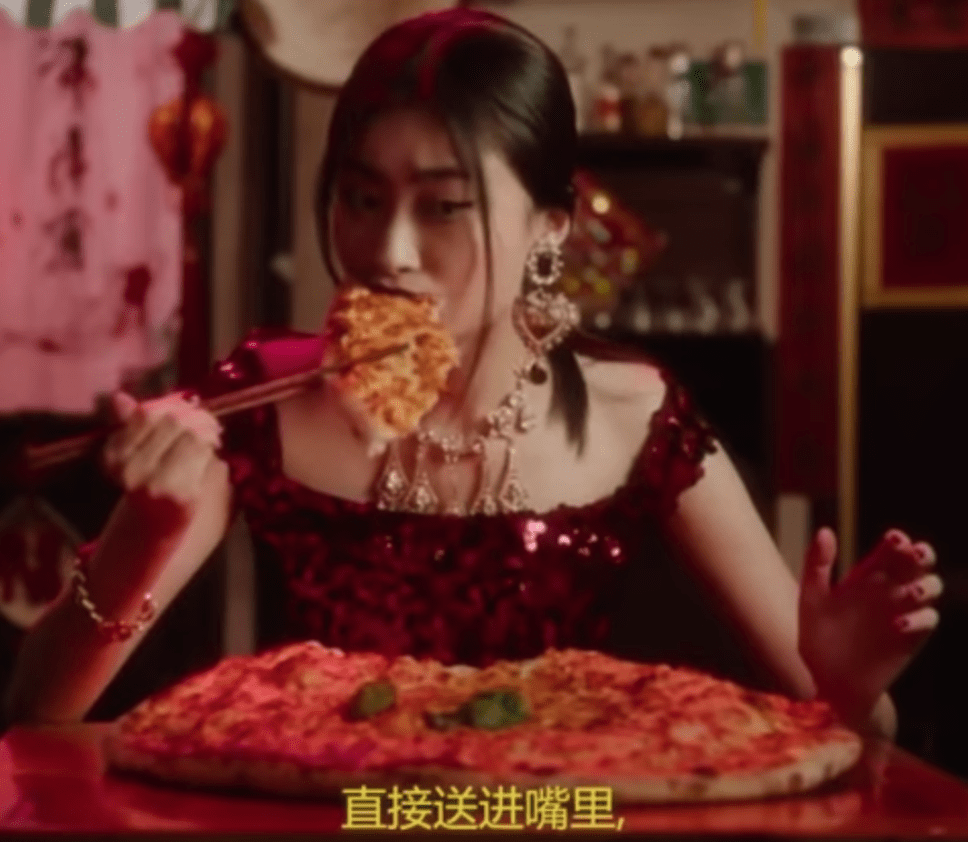
The Italian luxury brand Dolce & Gabbana also received backlash for their three videos that they released on Weibo to promote their Shanghai runway show, “The Great Show.” One video in particular showed an Asian woman wearing a Dolce & Gabbana dress attempting to eat Italian food with chopsticks. There was Chinese folk music playing in the background with a voiceover of a man instructing and mocking her. People on Weibo called the video racist, saying that it depicts Chinese people stereotypically and illustrates the woman as incompetent. She is meant to be laughed at and the advertisement suggests that she is unable to conform to Western culture. Some even wanted to boycott the brand, with #boycottdolce trending on Twitter. Hundreds of Chinese actors and models that were planning on walking the runway withdrew from the event. Dolce & Gabbana apologized and ultimately cancelled their show.
Racially insensitive fashion advertisements still have yet to be a thing of the past. Hopefully, we can continue to learn from these instances and continue to hold brands accountable for the way that they portray people of color.
As we all know, advertising is vital in the fashion world. Companies such as Dolce & Gabbana, Gucci, and Calvin Klein are notorious for their spontaneous fashion advertisements, utilizing their platforms to incorporate a variety of different themes and settings to fully display their products. However, aside from publicizing products, what are these advertisements really promoting in regards to gender and sexuality?
For years, fashion advertisements have been portraying stereotypical pictures of women in response to the social and cultural perceptions reflected in society. In many images, women are seen as submissive, inferior, and vulnerable. The majority of the advertising campaigns promoted by high-end fashion brands contain female models closed off and heavily reliant on a male figure. Rather than showing dominance and authority in women, they are constantly being portrayed in a sexualized and seductive way, and are often viewed as the vulnerable or powerless individuals in fashion advertising.
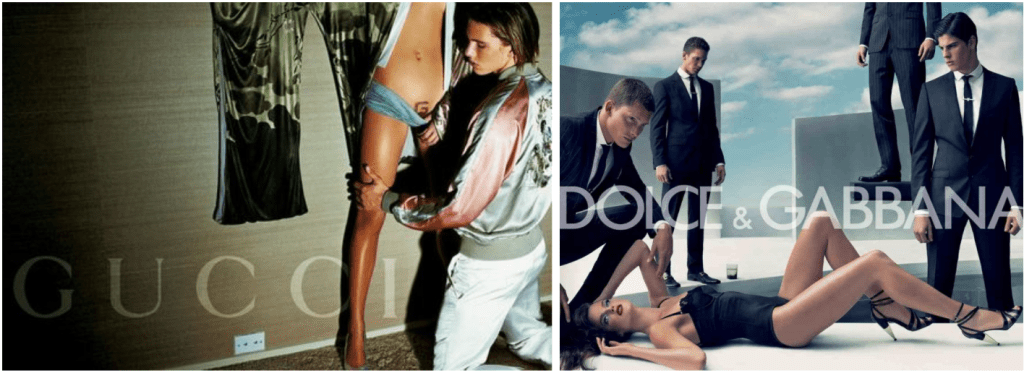
In addition, women are notorious for showing different forms of body language than men. For example, in the following Hugo Boss ad, the woman has her arm steady against a platform, as if she is trying to keep herself up by the dominant male figure. She also has a tense facial expression, and appears to be making very minimal eye contact. The man, however, has his hand casually in his pocket while grabbing the woman’s waist, asserting his power and dominance over her.
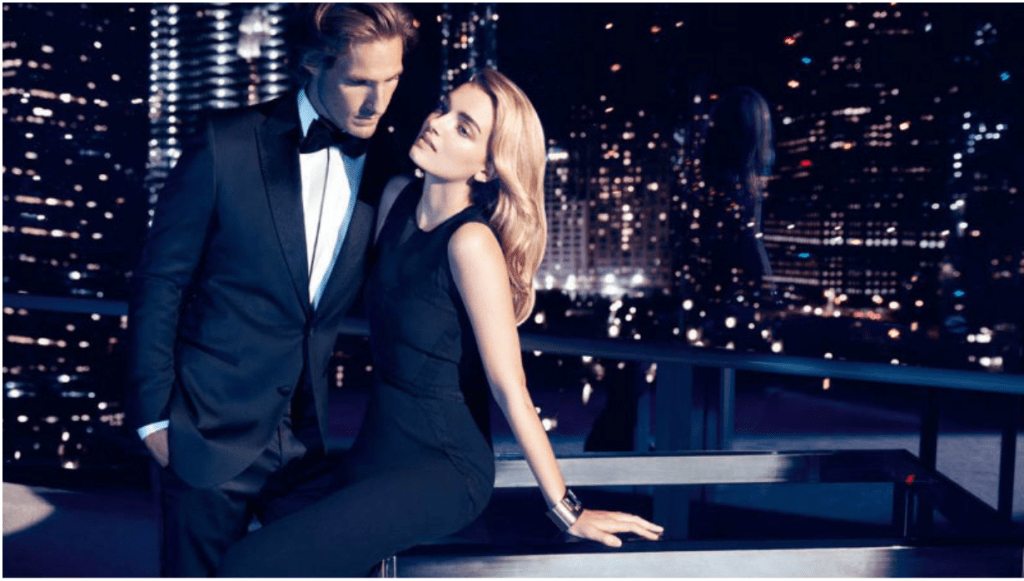
Essentially, these brands are intentionally selling gender identities in their advertisements, and manipulating their audiences to further succumb to the stigmatized gender roles present in our society. It is said that Calvin Klein, one of the most famous and successful fashion brands, was a main influencer of sexualized advertisements, and has influenced many other brands to do the same, which, of course, is simply controversial and provocative.
On the contrary, advertisers and graphic designers have been promoting more realistic visualizations of natural beauty among women, as seen in Dove’s beauty campaign and the #AerieReal campaign. Both of these companies have essentially changed the methods of advertising in fashion, by portraying women of all races, genders, shapes, and sizes, and promoting female dominance to reflect diversity and authenticity in society. We can only hope that these high-end fashion brands begin to alter their traditional methods of advertising to promote more realistic and natural images of women.
 Fashion