Emily Bajek, Katie Sun, Sanjna Sadarangani
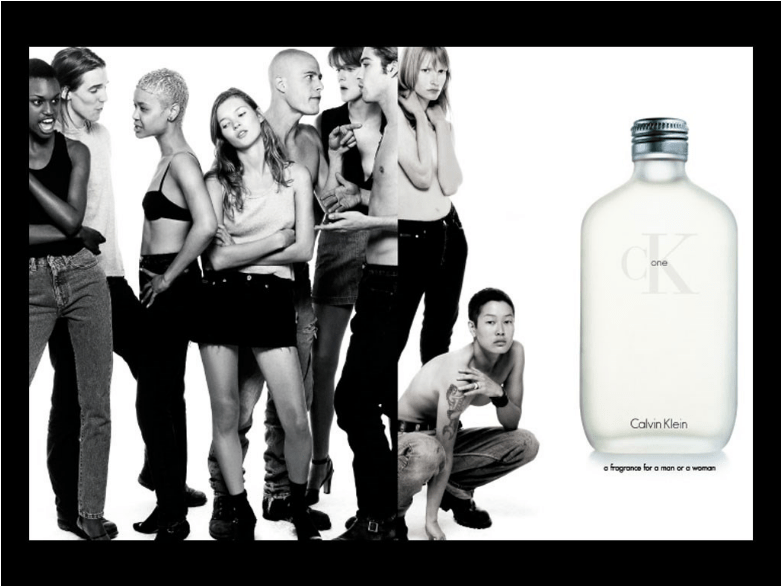
In the 1980s and 1990s, Calvin Klein was a brand that had no problems casting models of color. For the years that followed, they started to become criticized for lacking racial inclusivity particularly in their fashion shows, acquiring a reputation for having some of the whitest New York Fashion Week shows. However, in recent years, they have begun to include more non-white models as well as celebrate them in their campaigns and runway shows.
Calvin Klein came under fire in 2013 for their lack of racial inclusivity, when black model and activist Bethann Hardison sent out letters to the four governing bodies that oversee the New York, London, Paris, and Milan Fashion Weeks. The letters were sent on behalf of The Diversity Coalition, discussing the lack of non-white models on the runways. The letters concluded with a list of designers and brands that lacked racial diversity on their runways, including Calvin Klein, along with other brands such as Céline, Chanel, Alexander McQueen, Louis Vuitton, Prada, and Versace.
James Scully, a casting director, has been vocal about the shows that did not have diverse casting in their shows. Scully has said that Calvin Klein would sometimes hire one black model “to not get in trouble.” Additionally, the women’s creative director of Calvin Klein, Francisco Costa, justified their choices by saying, “There are only a handful of top-level, professionally trained models of color at a particular level out there now, and they end up being booked by other fashion houses and can be seen on dozens of runways each season, which is counter to what we are looking for.”
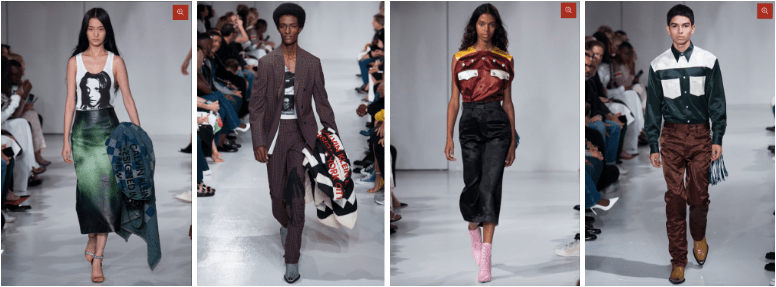
After looking through their recent campaigns and runway shows, Calvin Klein has definitely made improvements. Their runways are more racially inclusive and move beyond using non-white models only as a token minority. A report of their Spring 2019 advertisements found that non-white models made up 67% of advertisements for Calvin Klein Performance, 67% for CK Calvin Klein, and 58% for Calvin Klein Underwear.

Their newest campaign launched in February of 2020, titled “DEAL WITH IT.” It celebrates “unapologetic confidence and self-love,” featuring a diverse range of celebrities who have a “willingness to bare themselves to the world.” The campaign includes Lil Nas X, Lay Zhang, SZA, Justin Bieber, Hunter Schafer, Maluma, and Kendall Jenner.
Just in 2017, Calvin Klein, the world’s leading fashion brand, had signed the Women’s Empowerment Principles, known to be “comprising a set of seven areas in which businesses can take action to promote gender equality in the workplace.” Steve Shiffman, CEO of Calvin Klein, spoke out about his commitment to the organization and emphasized his important role as a global leader, and his battle to “continue to fight for gender equality across the world, and lead true social change.” It is true that the brand is a prime influencer of inclusivity and diversity among its models, however, it hasn’t always been so impactful in this way.
Back in 2016, Calvin Klein presented its campaign tagline “I ____ in #MyCalvins” which sparked controversy regarding the brand’s true message to its consumers. Actress Klara Kristin posed in an “up-the-skirt” photo, with the caption, “I flash in #MyCalvins,” following an image of Kendall Jenner holding a grapefruit with the caption, “I eat in #MyCalvins.” Many people have critiqued the images on social media, saying they “objectify and hyper-sexualize women.”
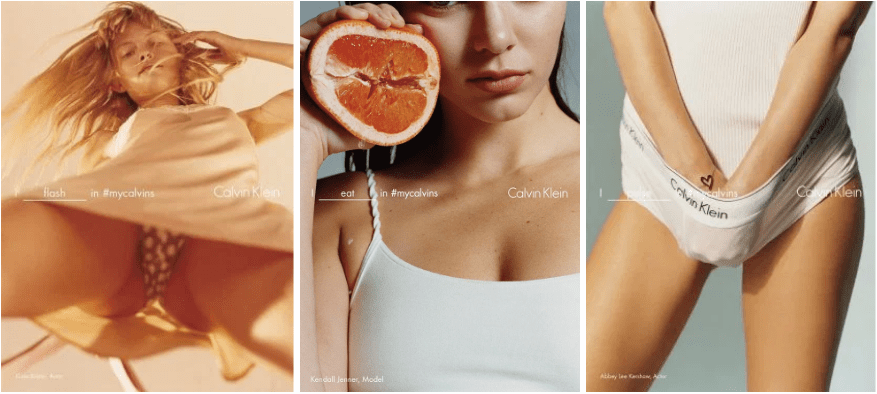
This image shows a woman with her hands in her underwear, with the caption “I pulse in #MyCalvins”. Clearly, these photos are simply supporting the perpetuation of hypersexualized women in society, and using women as a sexual appeal to advertise its products. In addition to representing women this way, the brand also has also stigmatized gender roles, portraying men in a higher light than women.
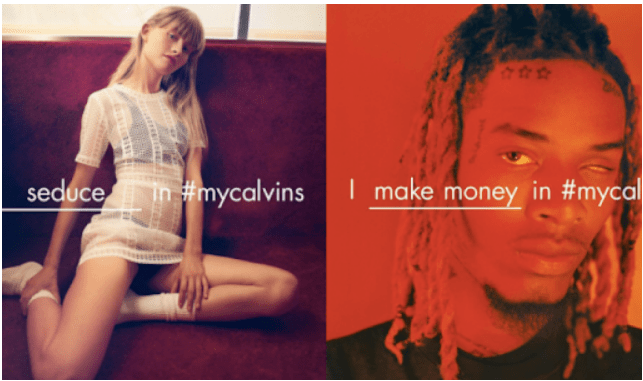
Advertisements show Klara Kristin posed on a couch, with the caption “I seduce in #MyClavins” yet, in another light, portray Fetty Wap’s ad with a simple headshot of himself in a regular black T-shirt, with a caption “I make money in #MyCalvins”. The two are clearly juxtaposed, as they address the double standards of men being breadwinners and women being sexualized.
Calvin Klein Australia is also known for its “rape” ad that was present in 2007. The ad shows a woman getting raped by a gang of men, in an effort to display the “dark fantasies” people may dream about when buying their products. However, an idea like this is simply unprofessional and morally wrong. To attach a personal sexual opinion to your brand equity is distasteful, and is quite offensive to women.
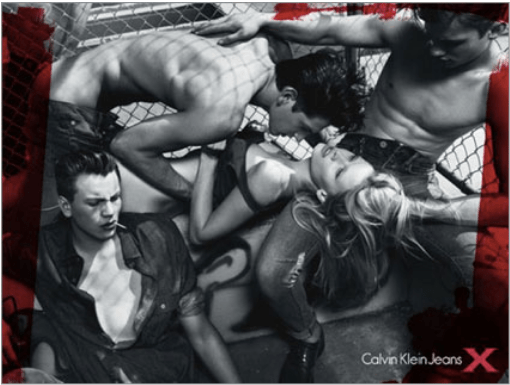

Although Calvin Klein has a history of hypersexualizing women, the brand has transformed its traditional tools of advertising to incorporate a more diverse and accepting scenery for its products. It now promotes difference among individuals, by including those of all genders and sexualities to support its campaign. Luckily, new protocols have opened up new opportunities to support gender equality and human rights across its leading corporations by “promoting education, training, and professional development for women.”
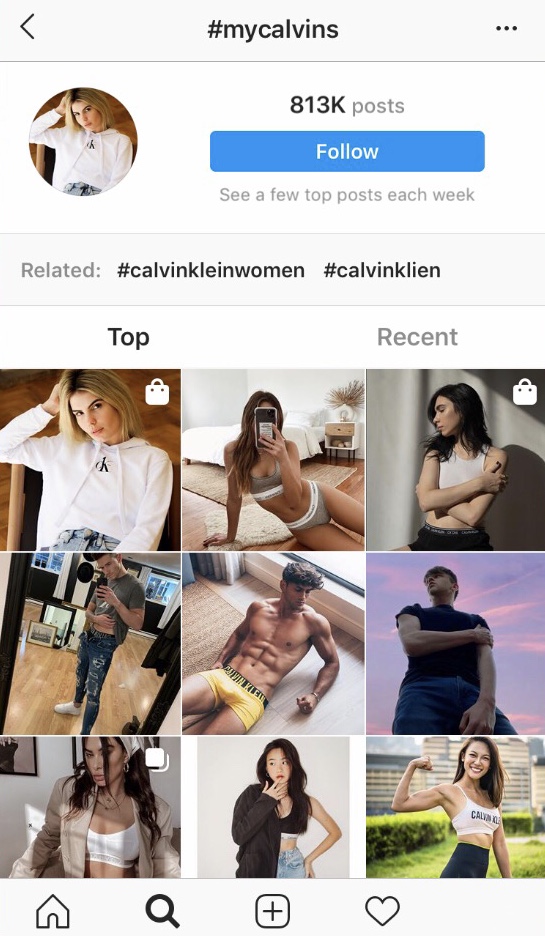
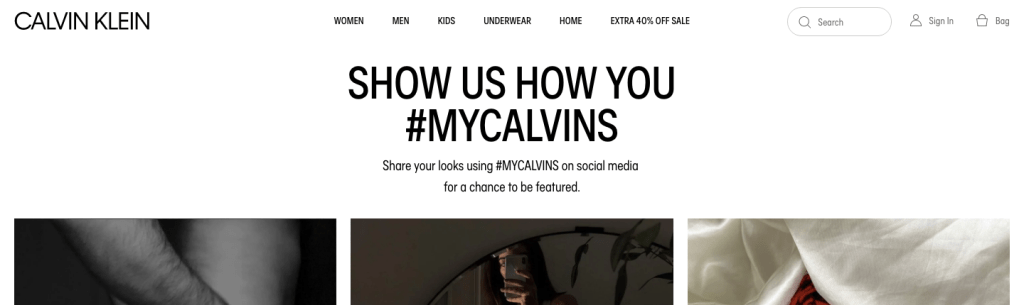
Calvin Klein’s decision to spearhead their latest campaigns with a hashtag was well thought out. As I mentioned in an earlier reply, hashtags are a method of grouping. This can be taken both literally as well as socially. Instagram and other social media platforms that support hashtags literally group posts that use the same hashtag, but people also like to use hashtags because this places them in a social group with other people who use the same hashtag. For example, wedding hashtags, which are becoming more and more popular as well as more and more socially sought after, are used by guests to verify that they are part of the ingroup of people who were invited. The APA dictionary of psychology defines an ingroup as “a group characterized by intense bonds of affiliation such that each member feels a sense of kinship and some degree of loyalty to other members by virtue of their common group membership” (APA Dictionary of Psychology). The hashtags give their posts and their attendance at the wedding a sense of validity. In the same way, using Calvin Klein’s hashtag “#MyCalvins” puts everyone who uses it into a group of people that are given a figurative token of inclusion. If you look up #MyCalvins on Instagram, it is clear that the hashtag is being used by everyone, not just those who were paid to use it, in an effort to get into that coveted group. Calvin Klein gives a few people the chance to be featured through the use of the hashtag on social media.
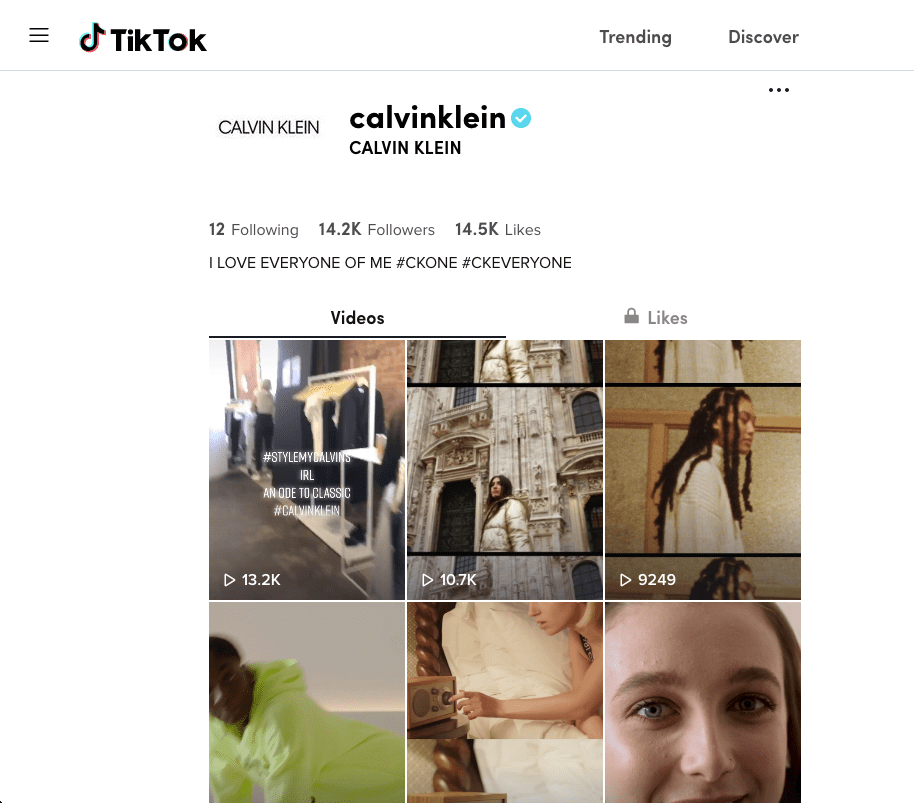
As every company has in today’s day and age, Calvin Klein has shifted the majority of their advertising to online media sources and social media platforms. In late 2018, the company announced that they would no longer be putting their main focus on print media starting in early 2019. In the last year, TikTok has quickly become one of the more popular sites on the internet. According to Business of Apps, TikTok has gained 800 million monthly active users. Calvin Klein chose their spring campaign last year to debut their brand on TikTok, allowing them to reach a new audience: younger children and teens.
 Fashion